
Nordic Minimalism Meets Estonia’s Historic Architecture
Historical architecture is not a limitation, but a characterful starting point for creating a contemporary home. Nordic minimalism brings forward what cannot be recreated - layers of time, authentic materials and the natural dignity of a space.

History as a Framework, Not a Limitation
In Estonia, historic architecture is layered – from wooden suburban housing to Art Nouveau and functionalist stone buildings. These layers are often seen as something that must be preserved in an unchanged form, yet recent developments suggest the opposite. History does not act as a limitation but rather provides a strong framework within which a contemporary and minimalist living environment can be created.
Nordic minimalism, characterized by clean lines, neutral tones, and natural materials, does not attempt to compete with historic architecture. On the contrary, it highlights the value of the existing space and creates a balance between old and new that feels visually dynamic yet harmonious.
Kalamaja: Robust Wood and Scandinavian Lightness
Tallinn’s Kalamaja has become one of the most compelling examples of how a historical setting and Nordic minimalism can work together. The wooden houses from the late 19th and early 20th centuries are often restored externally in a manner close to their original appearance, while the interiors reflect conscious contemporary choices.
Original structures such as ceiling beams and floorboards are preserved, yet placed in dialogue with light wall surfaces and a visually calm interior design. Kitchens and storage solutions are often designed to blend into the space without drawing unnecessary attention. This approach creates an environment where historical materials and a modern sense of space coexist without overshadowing one another.


Kadriorg: Art Nouveau Elegance in a Minimalist Interpretation
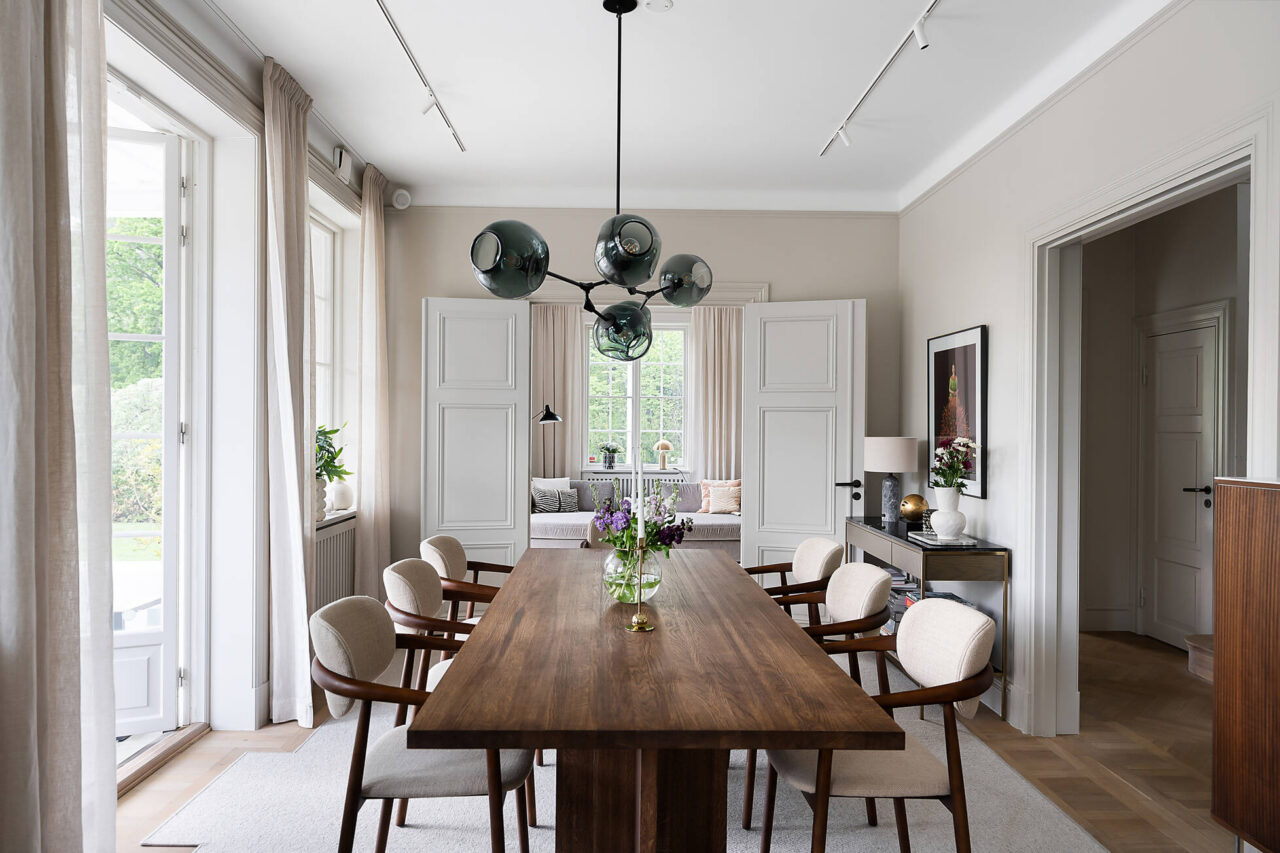
Kadriorg offers a different architectural starting point, where ornamentation, high ceilings, and rich detailing dominate. In such an environment, minimalism cannot be applied in the same way as in a simpler wooden house, as an overly sterile approach could diminish the character of the space.
The most successful solutions are based on balance, where historic details such as stucco and paneled doors are preserved and supported by calm and carefully considered interior design. The choice of furniture and materials remains understated yet high quality, allowing the original elements of the space to stand out. The result is an interior that feels both luxurious and defined by timeless clarity.


Telliskivi and Loft Culture: Industrial Past, Clean Present
In the area surrounding Telliskivi Creative City, former industrial buildings have been given new life as residential spaces. In these buildings, the historic layer is defined by brick, metal, and concrete, creating a distinctly different atmosphere.
Minimalism fits naturally into this environment, as it does not attempt to dominate but instead allows the materials to speak. Exposed surfaces remain the central character of the space, while furniture and details are kept simple and functional. This approach emphasizes openness and height, creating a living environment that is both clear and full of character.


Nõmme: Garden City Calm and Natural Warmth
Nõmme offers a softer interpretation of historic residential architecture in Tallinn. Originally developed as a garden suburb, the area is defined by detached houses, pine trees, generous plots, and a strong connection to nature.
In this setting, Nordic minimalism works best when it supports the calm and natural atmosphere of the area. Historic wooden villas and functionalist private houses can be complemented by light interiors, natural materials, and a restrained colour palette. Original details such as wooden floors, staircases, fireplaces, and window proportions are preserved, while contemporary solutions bring clarity and functionality.
The result is a living environment that feels warm, private, and deeply connected to its surroundings.


Tallinn Old Town: Medieval Character and Contemporary Restraint
Tallinn Old Town provides one of the most distinctive historic settings for contemporary living. Thick stone walls, vaulted ceilings, timber structures, and irregular layouts create interiors with a strong architectural identity.
Here, minimalism must be applied with particular sensitivity. Instead of concealing the historic character of the space, contemporary design should highlight it. Exposed stone, uneven walls, and original openings can be balanced with discreet lighting, built-in storage, and carefully selected furniture.
Nordic minimalism in the Old Town is therefore not about creating a blank interior, but about bringing clarity and comfort into a complex historic environment. The result is a refined and atmospheric home where medieval architecture and contemporary living coexist naturally.


Why This Combination Works in Estonia
In the Estonian context, several factors support the development of this approach beyond purely aesthetic considerations. Limited natural light during darker seasons encourages the use of light and open solutions that help visually expand spaces and enhance brightness. At the same time, there is a strong cultural connection to natural materials, which are already present in historic architecture and are brought forward effectively through a minimalist approach.
Additionally, the real estate market clearly demonstrates that well-executed renovation projects – where historic substance is combined with contemporary design – create higher value. This is especially evident in central and historic areas of Tallinn, where authenticity and high-quality spatial solutions go hand in hand.


The Key to Good Design: Balance
The most successful projects do not attempt to transform historic spaces into something they are not. Instead, they focus on highlighting what already exists and complementing it with contemporary clarity. When a space contains strong historic elements, they are allowed to dominate, while in simpler environments minimalism can take the leading role.
Such balance does not emerge by chance, but requires conscious decisions and a sensitive approach to both architecture and interior design.


02.06.2026
LUXUM Real Estate Celebrated Its 5th Anniversary
LUXUM Real Estate’s anniversary brought together wonderful company, warm reunions and inspiring conversations. The afternoon unfolded in an elegant atmosphere, complemented by delicious bites, excellent drinks and a heartfelt sense of celebration.
13.05.2026
April Market Overview: Summer Home Sales Rose Sharply
The April real estate market was quieter than in March, but significantly more active than at the start of the year. As is typical for the spring season, the summer home market picked up.